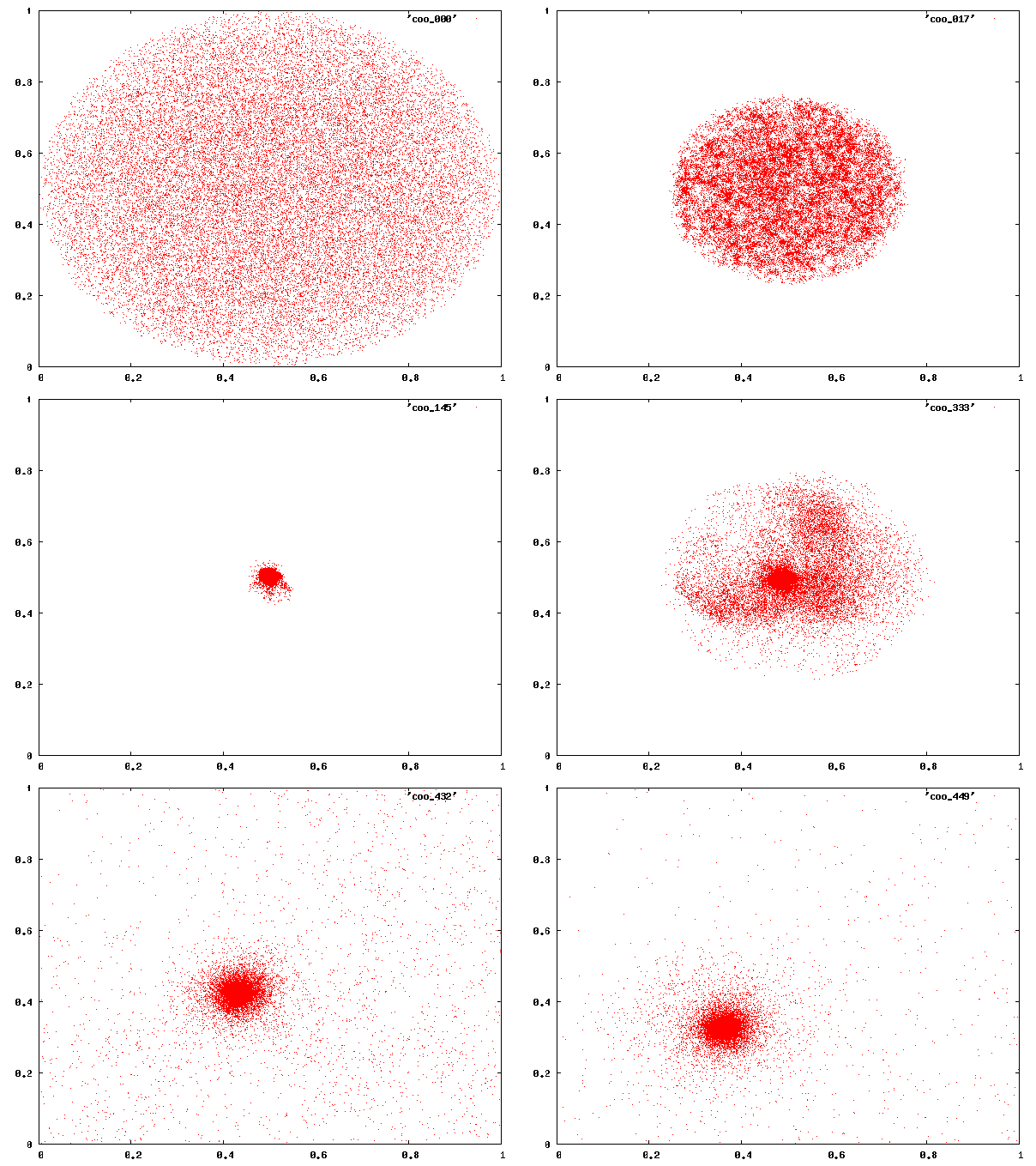
In order to understand of halo structures we focused in obtaining a systematic understanding of the quasi-stationary properties of the mass distributions resulting from the gravitational evolution of isolated systems. To this aim we considered controlled numerical experiments in which a system is prepared in a relatively simple initial condition, and it then evolves numerically through gravitational dynamics. In this way we were able to understand several phenomena:
- the mass and energy ejection in cold collapses
- the difference between warm and cold collaspes,
- the origin of the universal properties of QSS from cold collapses,
- the effect of symmetry breaking,
- the generation of trixiality,
- the generation of angular momentum,
- the formation of satellites,
- the effects of discreteness
- the difference between the properties of QSS generated from a top-down and a bottom-up dynamics.
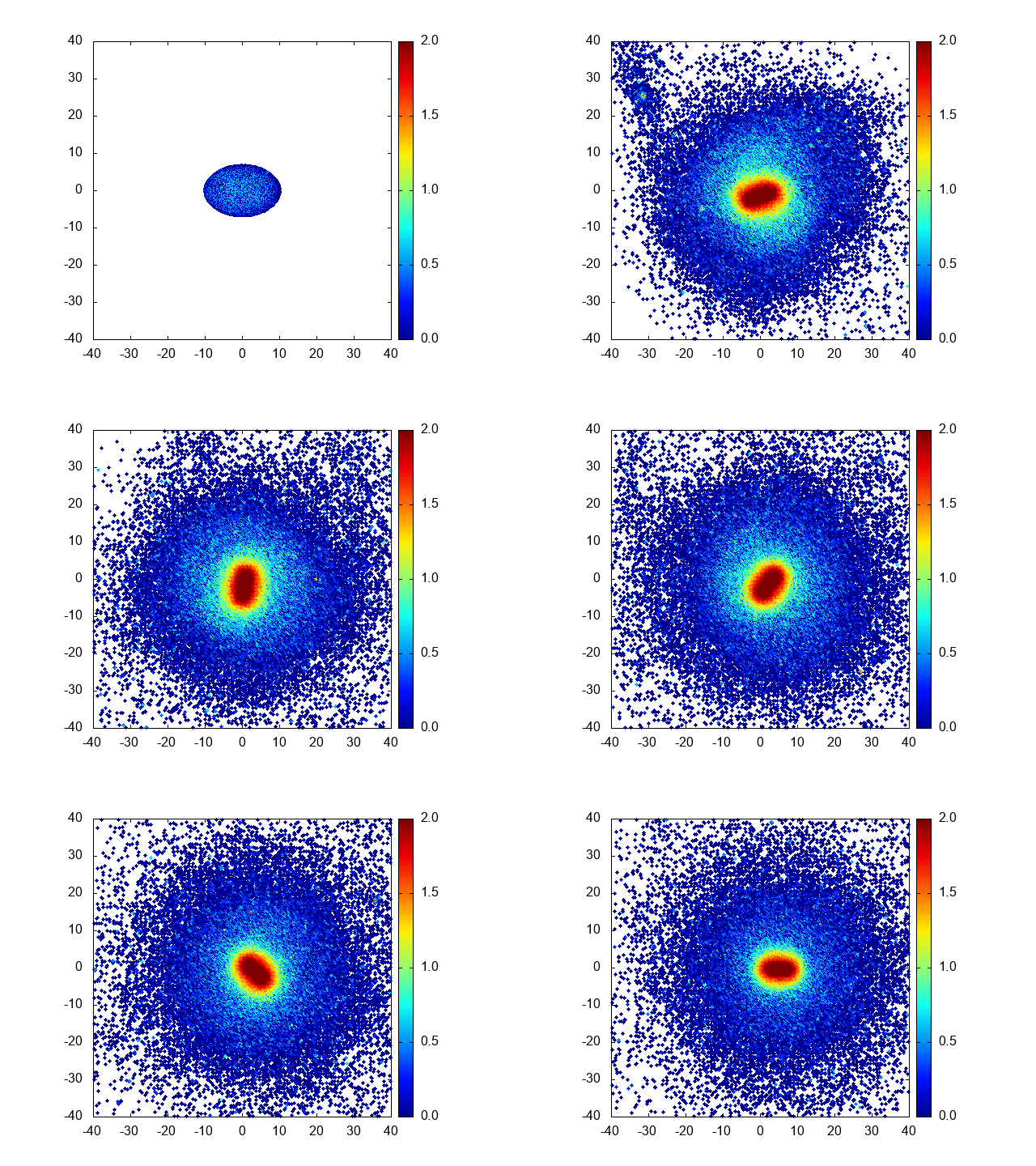
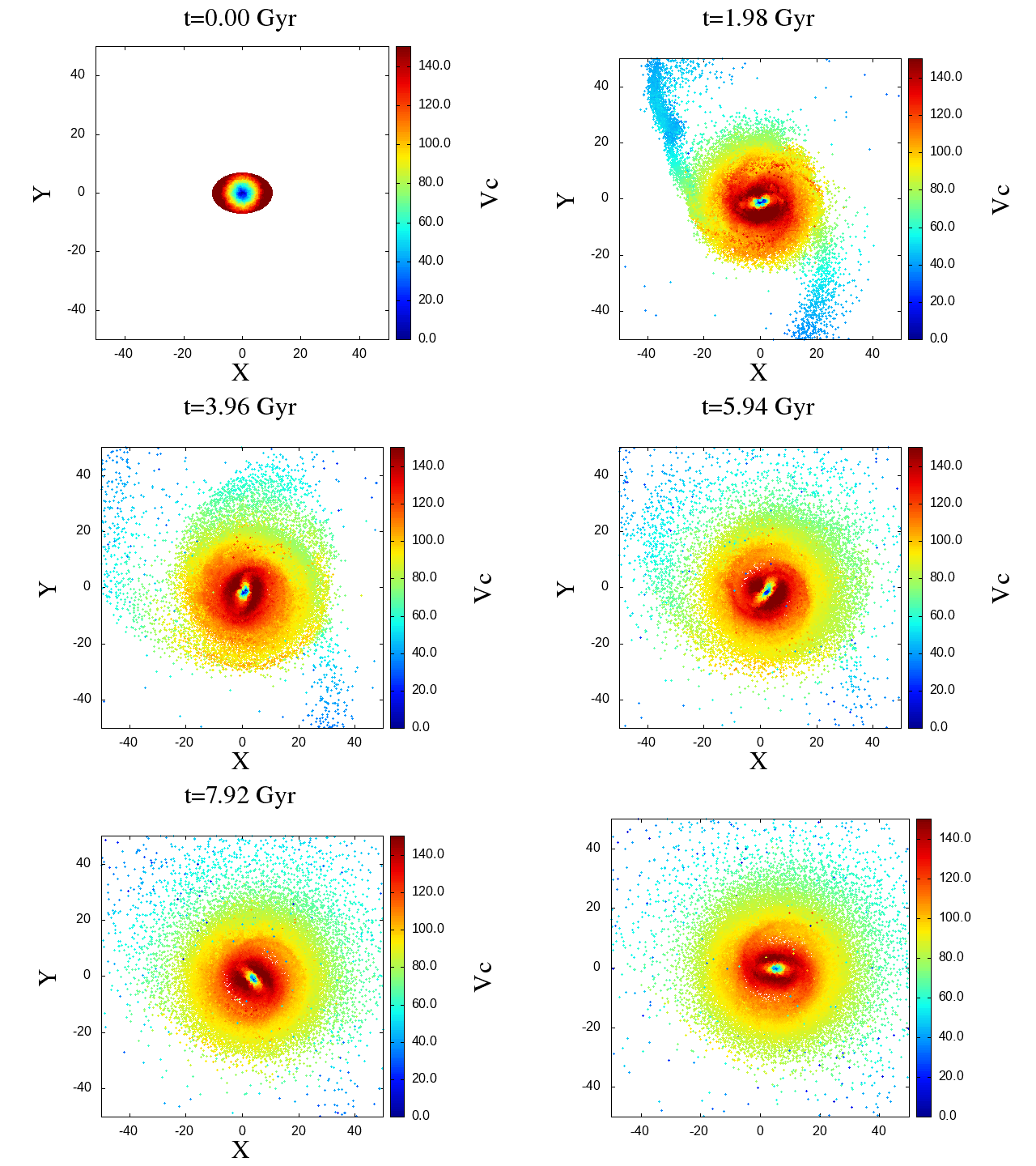
In addition we studied the case in which the initial systems breaks spherical symmetry and has some angular momentum and we showed that in such collision-less dynamics, quite generally, there are formed long-lived transient out-of-equilibrium structures with a rich variety of shapes such as spiral arms with or without bars and/or rings, that can have significant observational signatures and consequences.
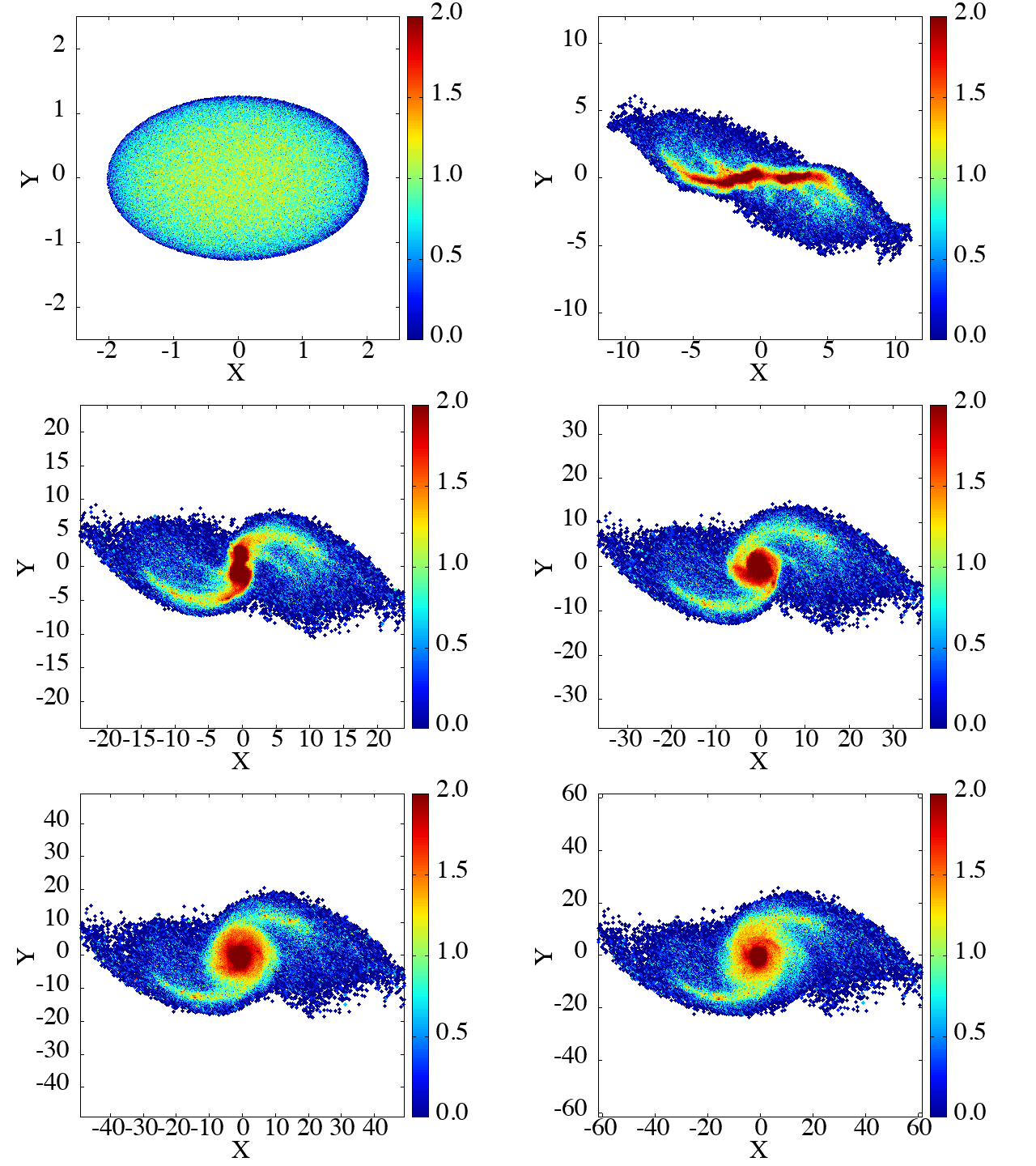

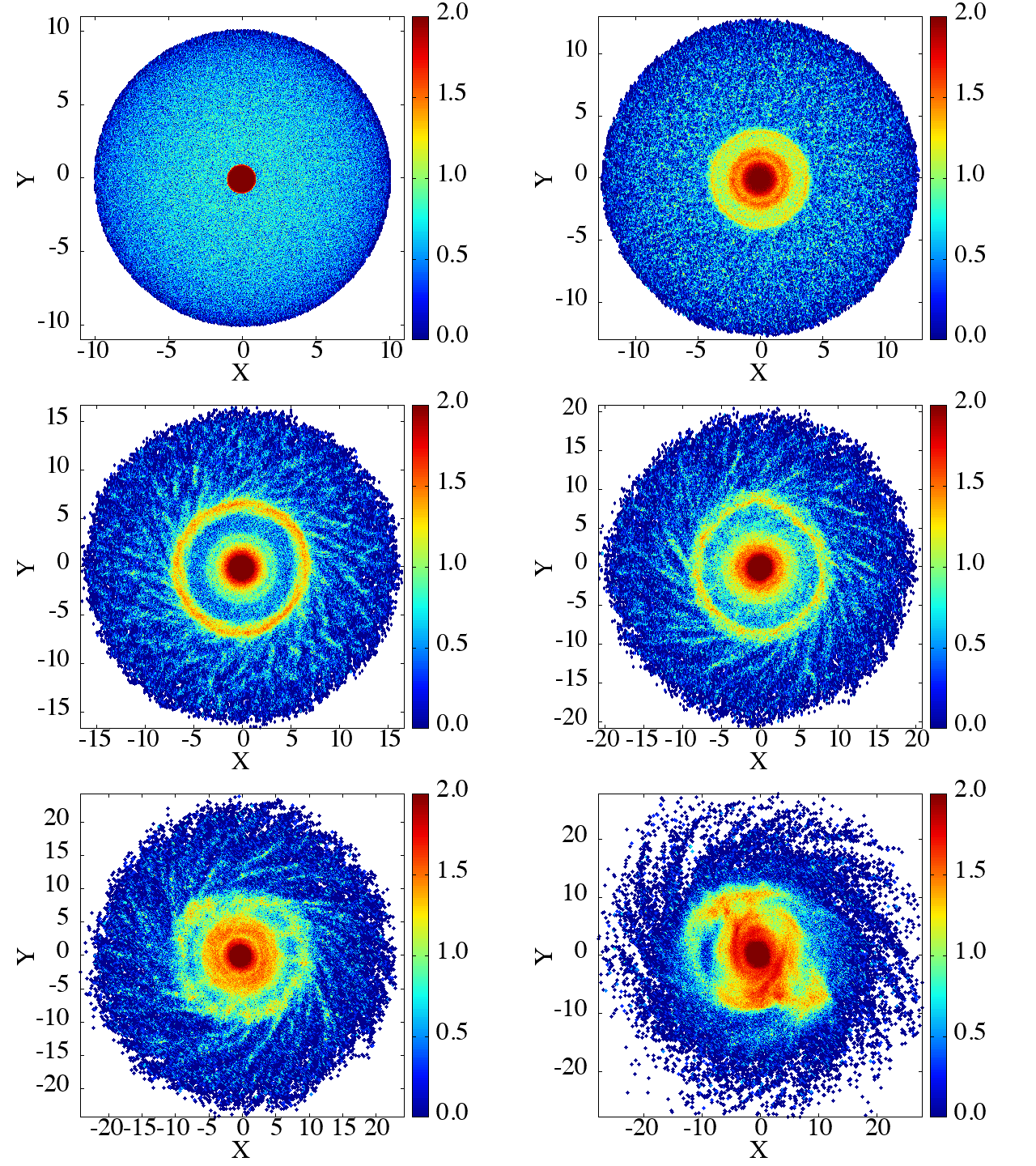

The evolution of self-gravitating systems, and long-range interacting systems more generally, from initial configurations far from dynamical equilibrium is often described as a simple two-phase process: a first phase of violent relaxation bringing it to a quasistationary state in a few dynamical times, followed by a slow adiabatic evolution driven by collisional processes. In this context the complex spatial structure evident, for example, in spiral galaxies is understood either in terms of instabilities of quasistationary states or as a result of dissipative nongravitational interactions. We illustrate here, using numerical simulations, that purely self-gravitating systems evolving from quite simple initial configurations can in fact give rise easily to structures of this kind, of which the lifetime can be large compared to the dynamical characteristic time but short compared to the collisional relaxation timescale. More specifically, for a broad range of nonspherical and nonuniform rotating initial conditions, gravitational relaxation gives rise quite generically to long-lived nonstationary structures of a rich variety, characterized by spiral-like arms, bars, and even ringlike structures in special cases. These structures are a feature of the intrinsically out-of-equilibrium nature of the system’s collapse, associated with a part of the system’s mass while the bulk is well virialized. They are characterized by predominantly radial motions in their outermost parts, but also incorporate an extended flattened region which rotates coherently about a well-virialized core of triaxial shape with an approximately isotropic velocity dispersion. We characterize the kinematical and dynamical properties of these complex velocity fields and we briefly discuss the possible relevance of these simple toy models to the observed structure of real galaxies, emphasizing the difference between dissipative and dissipationless disk formation.
Dynamics of finite self-gravitating systems with a dissipative gas component
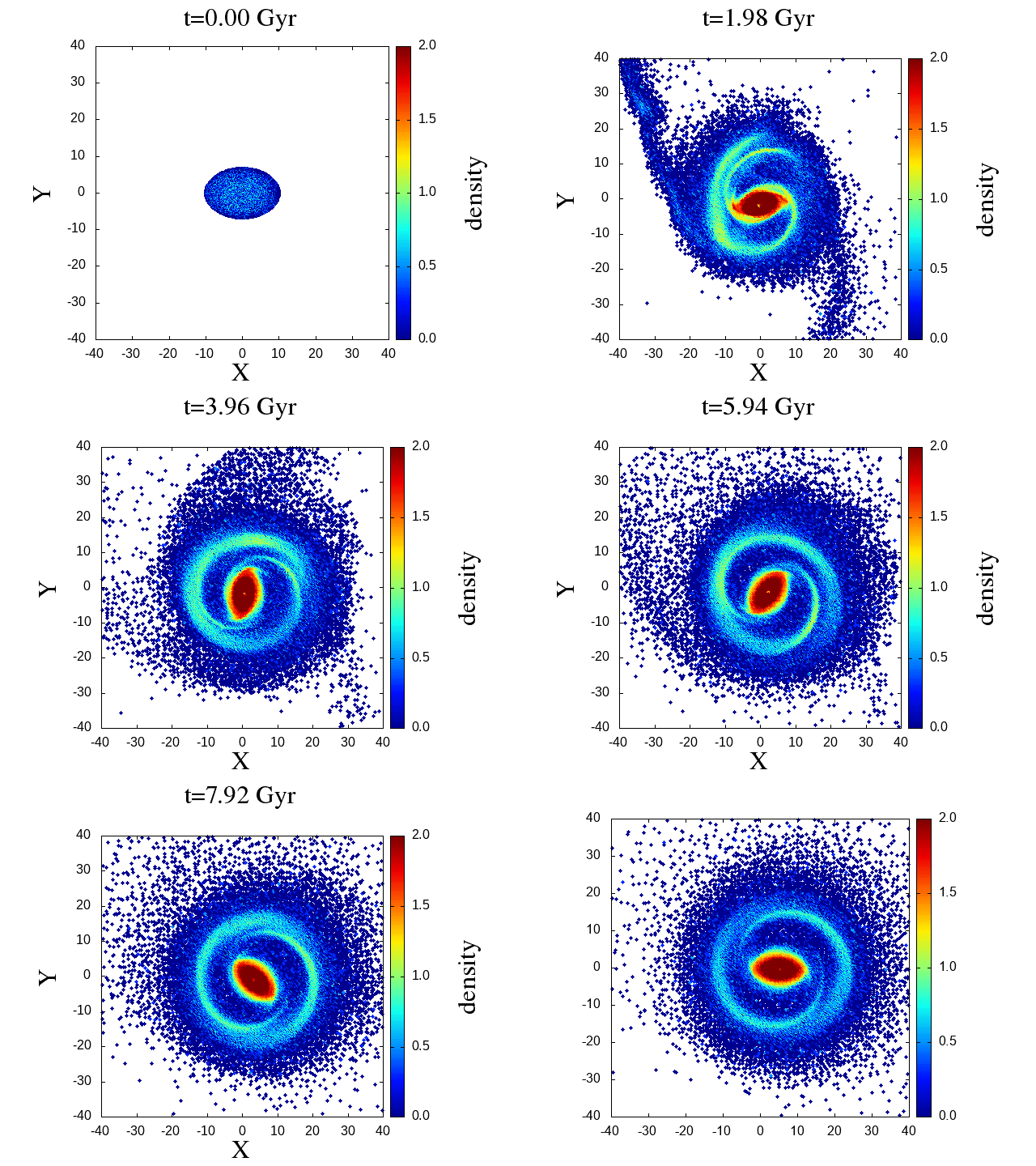
We considered the impact of dissipative non-gravitational physics such as gas dynamics on the purely gravitational dynamics of an isolated system . We showed that long-lived, but non-stationary, spiral arms can formed as consequence of the violent collapse of an isolated over-density, characterized by a mixture of purely self-gravitating matter and gas that may dissipate energy via radiative cooling. Spiral arms are made of gaseous particles that move coherently because they have acquired a specific phase-space correlation during the gravitational collapse phase: this represents a signature of the violent origin of the arms and implies both the motion of matter and the transfer of energy. In this violent scenario the galaxy consists in a tick and think disk which are not embedded in an halo structure, that is instead typically formed in a slow and mild bottom-up dynamics.


 Francesco sylos labini