The most precise three-dimensional map ever obtained of stellar motions in the Milky Way suggests that dark matter may be concentrated in a giant invisible disk rather than in the spherical halo predicted by the standard cosmological model.
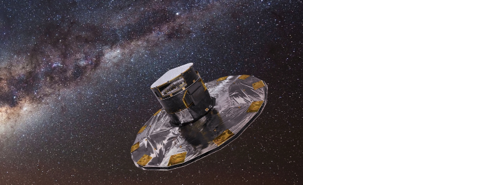
A new study, that will be published by The Astrophysical Journal, by Dr. Francesco Sylos Labini of the Enrico Fermi Research Centre (CREF) in Rome and Prof. Roberto Capuzzo-Dolcetta of Sapienza University of Rome, based on data from the European Space Agency’s Gaia mission, has found compelling evidence that the dark matter in the Milky Way may be distributed in a flattened, disk-like structure rather than in the nearly spherical halo long assumed in standard cosmological models.
Dark matter, an invisible form of matter that does not emit or absorb light, is believed to account for about 85% of all matter in the Universe. Although its nature remains unknown, astronomers infer its presence through its gravitational effects on stars and galaxies.
Using Gaia Data Release 3, the researchers reconstructed the most detailed measurements to date of the Milky Way’s gravitational field within a region extending up to 2 kiloparsecs above and below the Galactic plane and from 8.5 to 14 kiloparsecs from the Galactic centre. The study simultaneously measured the Galaxy’s rotation curve at different heights above the disk and the vertical gravitational acceleration experienced by stars.
“Most previous studies have focused on how stars move around the centre of the Galaxy,” says Dr. Francesco Sylos Labini. “But stars also move above and below the Galactic plane. These vertical motions provide a powerful probe of the geometry of the underlying mass distribution. Thanks to the unprecedented precision of Gaia, we can now test directly whether the dark matter component is distributed in a spherical halo or in a more flattened configuration.”
The analysis shows that conventional models consisting of the observed stellar populations embedded in a spherical dark matter halo cannot reproduce either the pronounced variation of the rotation curve with height above the Galactic plane or the observed vertical gravitational field.
In particular, the researchers found that the standard spherical halo contributes very little to the gravitational forces measured in the inner Galactic disk. Instead, the observations are naturally explained if a substantial fraction of the dark matter is concentrated in a flattened structure aligned with the Galactic disk.
“Our results indicate that the geometry of dark matter may be very different from the standard picture,” explains Prof. Roberto Capuzzo-Dolcetta. “Models in which dark matter is distributed in a disk-like configuration provide a significantly better match to the observations. If these results are confirmed by future data, they could have important consequences for our understanding of the formation and evolution of galaxies.”
The study takes advantage of the unprecedented precision of Gaia, which has measured the positions and motions of more than a billion stars in the Milky Way. Within the region analyzed, stellar velocities are determined with uncertainties below five percent, enabling some of the most stringent tests yet of the Galaxy’s mass distribution.
The findings do not directly reveal the nature of dark matter itself, but they suggest that its spatial distribution within galaxies may be significantly different from that assumed in the standard cosmological model. If confirmed, the results could have far-reaching implications for models of galaxy formation and for ongoing efforts to identify the physical nature of dark matter.
An important consequence of the analysis is that models with a flattened, disk-like dark matter distribution require substantially less dark mass than conventional spherical halo models. In the region of the Galaxy probed by the Gaia data, the inferred dark component is only about twice the visible mass, whereas standard spherical halo models typically require an order of magnitude more dark matter. This significantly reduces the amount of unseen matter needed to explain the observed gravitational field.
The results therefore reopen the question of whether at least part of the Milky Way’s dark component could consist of ordinary, yet difficult-to-detect, baryonic matter, rather than being entirely composed of exotic non-baryonic particles as assumed in the standard paradigm. While the present study does not provide a direct answer to this question, it shows that the observational constraints on the amount and distribution of dark matter are more flexible than previously believed.
The researchers emphasize that future Gaia data releases, together with upcoming astronomical surveys, will allow even more precise measurements of the Milky Way’s gravitational field and provide critical tests of competing models.
“We are entering an era in which the geometry of dark matter can be measured directly from observations,” says Sylos Labini. “The next generation of Gaia data will enable us to determine with much greater precision whether the dark matter in our Galaxy forms a spherical halo, a flattened disk, or a more complex structure.”
Link to the paper: https://arxiv.org/abs/2606.12548
 Francesco sylos labini
Leave a comment