Tag Archives: Climate Change

Clima: Stampa e tv fanno finta che vada tutto bene

L’estate italiana tra giugno e luglio 2025 ha vissuto un’ondata di caldo eccezionale, con temperature record e impatti drammatici sulla salute pubblica, l’ambiente urbano e i servizi essenziali. Eppure, secondo il report dell’Osservatorio di Pavia per Greenpeace, solo in circa un caso su quattro le notizie televisive hanno collegato queste ondate al cambiamento climatico: nella stragrande maggioranza dei casi l’origine antropica del fenomeno non è menzionata, o al massimo viene citata in modo superficiale. I principali quotidiani risultano ancora più carenti: quasi il 70 % degli articoli dedicati alle ondate di calore non fa alcun riferimento al riscaldamento globale. Quando lo fa, lo fa come nota introduttiva, senza approfondire le cause vere e proprie come le emissioni di gas serra

Continue reading Clima: Stampa e tv fanno finta che vada tutto bene
Climate: Press and TV Pretend Everything is Fine

The Italian summer of June and July 2025 experienced an exceptional heatwave, with record temperatures and dramatic impacts on public health, urban environments, and essential services. Yet, according to a report by the Osservatorio di Pavia for Greenpeace, only in about one out of four cases did TV news link these heatwaves to climate change: in the vast majority of cases, the human origin of the phenomenon is not mentioned, or at best, cited superficially. Major newspapers are even worse: nearly 70% of articles dedicated to heatwaves make no reference to global warming. When they do, it’s merely in the introduction, without delving into the actual causes such as greenhouse gas emissions.

Continue reading Climate: Press and TV Pretend Everything is Fine

Chinese solar can save us from the climate crisis


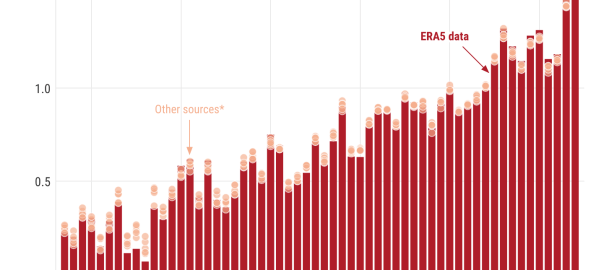
Like every year, the European Center for Medium-Range Weather Forecasts (Ecmwf), an independent European intergovernmental organisation, presented data relating to the Copernicus space programme, the European Union’s flagship program for Earth observation, the monitoring of the atmosphere and climate change. The situation, in the almost generalized indifference, is increasingly dramatic. 2024 has been confirmed as the warmest year on record since 1850, with a global average temperature of 15.1°C, beating the previous warmest year 2023 by 0.12°C. This places it at 1.6°C above an estimate of the pre-industrial level, making it the first calendar year to exceed the 1.5°C threshold.

Continue reading Chinese solar can save us from the climate crisis

The End of the “Age of Reason” in the Times of Cop28

We have lived for 250 years embracing the values of the Enlightenment, guided by the ideal of using reason to improve human prosperity. By “reason,” we mean open decision-making, the study of science, history, and the objective evaluation, as much as possible, of ideas and facts. To assess the effectiveness of the age of reason, we can compare the developments over the last 250 years in various dimensions of human prosperity. Life expectancy data show that, historically around 30 years, today it is over 70 worldwide and exceeds 80 in developed countries. Infant mortality, which in the past caused the death of a third of children before the age of five, is now 4% worldwide. Famines, once common, have been drastically reduced and mostly occur in war zones. Extreme poverty, affecting about 90% of the world’s population 200 years ago, is now less than 9%. Wars have decreased, torture has been reduced, slavery is not legal anywhere in the world, and the homicide rate has drastically decreased. Literacy, which only affected 10% of the world’s population a few hundred years ago, is now close to 90%, especially considering people under 25. Looking at these data, it seems that the adoption of Enlightenment ideals, with reason as a guide, has significantly contributed to the prosperity of humanity, or at least a good part of it. However, despite these successes, there is a general concern for the future, as all countries, regardless of the political system, seem to be moving irresponsibly towards common challenges facing humanity.

Continue reading The End of the “Age of Reason” in the Times of Cop28

Clima e geopolitica: ecco il filo rosso delle guerre

(Pubblicato su Il Fatto Quotidiano)

La Russia ha invaso l’Ucraina, una guerra prevedibile e facilmente evitabile se vi fosse stata una seria volontà di tenere conto delle esigenze di sicurezza di tutti i Paesi coinvolti: ma l’Occidente era troppo sicuro che la sua forza economica avrebbe facilmente piegato un Paese visto come un “distributore di gas con bombe atomiche”. I conti si sono rivelati sbagliati e neppure la distruzione del Nord Stream ha danneggiato in maniera sostanziale la Russia.

La catastrofe a Gaza rappresenta l’esplosione vulcanica di una tensione che si è alimentata da mezzo secolo almeno e a differenza della crisi ucraina non si capisce quale sia lo scopo ultimo né di Israele, che sembra aver dimenticato che il fine non giustifica i mezzi, e che martoriare una popolazione non potrà che generare ulteriore odio e terrore, ma neppure dei terroristi di Hamas che hanno ottenuto di rimettere il problema palestinese al centro dell’attenzione internazionale a un prezzo insostenibile. Ma qual è il filo rosso che unisce le diverse crisi?

Continue reading Clima e geopolitica: ecco il filo rosso delle guerre

The “Scientific” Publications of Climate Deniers

Francesco Sylos Labini, Il Fatto Quotidiano

Climate deniers, those who argue that climate change is not occurring and/or not caused by humans, are often criticized for not engaging with the scientific literature in the field of climatology. There is nearly universal consensus within the scientific community that climate change is happening and is primarily due to human carbon dioxide emissions. However, there is an exception to this consensus in the form of an article published in The European Physical Journal Plus (EPJp), which is part of the Springer-Nature group, a major international publisher of scientific journals, including the renowned journal Nature.

Continue reading The “Scientific” Publications of Climate Deniers

The Poisoned Climate Debate

Editorial, Il Fatto Quotidiano

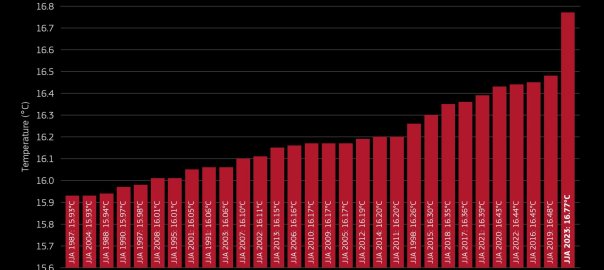
According to Copernicus measurements, the European Union’s main climate monitoring program, Europe is experiencing record-breaking temperatures this summer due to a “heat dome” covering the entire Mediterranean basin. The sea has never been so warm, with some areas having temperatures 5 degrees above normal. This prolonged and extreme heatwave has devastating effects on the environment and human health (a recent study published in Nature Medicine indicated that over 60,000 people in Europe lost their lives due to last summer’s heatwaves). It also impacts various animal species and conditions that increase the likelihood of wildfires. The recent heatwave has made it clear that with rising temperatures, the hottest days are becoming more common, and the coldest days are becoming less so. This implies that, in the long term, with climate warming, we will witness an increasing number of summer days with very strong heat stress and, in Southern Europe, more days of extreme heat stress.

Continue reading The Poisoned Climate Debate